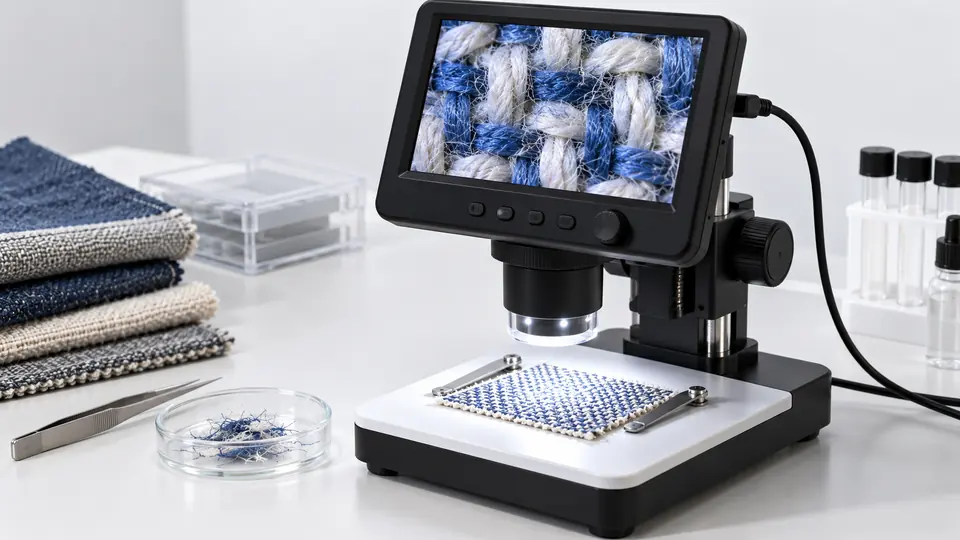
LCD digital microscopes remove a familiar nuisance from close inspection: leaning into an eyepiece while one eye squints and the other searches for focus. A built-in screen lets you watch coin marks, solder joints, plant surfaces, or prepared slides at a more natural angle. The catch is that these instruments are built around very different viewing tasks. A microscope with a tall metal stand may suit PCB work, while a slide-based model with transmitted lighting is better suited to classroom biology.
Advertised magnification deserves a careful reading. Numbers such as 1,000X, 1,500X, and 2,000X describe enlargement claims, but they do not automatically establish optical resolution or the amount of genuine specimen detail. Stand design, focus adjustment, field of view, lighting control, storage, and the type of object you plan to inspect often matter more than the largest number on the box.
The strongest general-purpose option here is the TOMLOV DM9 Max because its 10.1-inch screen, tall stand, adjustable lighting, photo and video capture, and PC or TV connections cover a broad range of inspection jobs. Smaller Elikliv and PalliPartners models make more sense for portable observation, while the Celestron and Andonstar slide-oriented systems serve buyers who need a more structured specimen-viewing setup.
Quick Answer
- Best Overall: TOMLOV DM9 Max 10.1″ Digital Soldering Microscope for its large LCD, tall metal stand, adjustable lighting, and broad coin and electronics use.
- Best Multi-Lens System: Andonstar AD246S-M 3 Lens 2160P HDMI Digital Microscope for its interchangeable lenses, HDMI output, slide accessories, and Windows measurement software.
- Best for Portable Inspection: PalliPartners Digital Microscope for Coins with Light HD Screen for its handheld use, rechargeable battery, compact screen, and included storage card.
- Best for Slide-Based Learning: Celestron LCD Digital Microscope II for its rotating display, mechanical stage, dual illumination, and prepared-slide workflow.
Best LCD Digital Microscopes Comparison Table
| Product | Best For | Display | Image Capture | Stand or Mount | Notable Feature |
|---|---|---|---|---|---|
| TOMLOV DM9 Max 10.1″ Digital Soldering Microscope | General inspection and PCB work | 10.1-inch IPS LCD | 20MP photos, 1080P video | 12.6-inch metal stand | PC and TV connection |
| Andonstar AD246S-M 3 Lens 2160P HDMI Digital Microscope | Multi-purpose viewing and demonstrations | 7-inch LCD | 2160P video, photos and videos | Adjustable boom arm | Three interchangeable lenses and HDMI |
| Celestron TetraView LCD Digital Microscope | Prepared slides and biological observation | 4.3-inch TFT LCD | 5MP photos, 20 fps SD video | Slide-oriented microscope body | 180-degree swivel screen |
| Celestron LCD Digital Microscope II | STEM learning and classroom sharing | 3.5-inch rotating LCD touchscreen | 5MP photos, 30 fps video | Mechanical stage | Top and bottom illumination |
| Andonstar AD210 10.1 Inch LCD Digital Microscope | Coins, soldering, and slides | 10.1-inch IPS LCD | 12MP photos, 1080P video | Metal stand with adjustable height | Top, side, and bottom lighting |
| TOMLOV DM9 7″ Digital Coin Microscope | Coin and surface inspection | 7-inch LCD | 12MP photos, 1080P video | 8.5-inch metal stand | 16GB card and gooseneck lights |
| Aikokkl 5″ LCD Digital Soldering Microscope | Compact PCB inspection | 5-inch IPS LCD | 1080P video and photo storage with card | Flexible gooseneck arm with C-clamp | Windows and Mac PC view |
| Elikliv EDM4 Digital Coin Microscope | Budget and portable viewing | 4.3-inch 720P LCD | Photos and videos with separate card | Height-adjustable stand | Built-in rechargeable battery |
| PalliPartners Digital Microscope for Coins | Handheld coin and hobby inspection | 4.3-inch LCD | Photos and video on included 32GB card | Metal bracket, handheld use | 4 to 5 hours of listed battery operation |
The most useful distinction is the viewing setup: large-screen inspection stands favor hands-on work, while slide microscopes prioritize specimen positioning and transmitted illumination.
1. TOMLOV DM9 Max 10.1″ Digital Soldering Microscope, Full View Coin Magnifier | 1500X, 12.6″ Metal Stand, 10 LED Lights, 20MP Photo/1080P Video, PC/TV Compatible, For Coin Collectors & PCB Repair, 16GB — Best Overall

The DM9 Max is the most balanced LCD microscope in this group for buyers who move between coins, electronics, watches, jewelry, and other small objects. Its 10.1-inch IPS screen gives the operator a broad built-in viewing area, while the 12.6-inch metal stand and larger base leave more room beneath the camera than compact handheld designs. The published information also identifies an adjustable working range from 5X to 1500X, though that advertised range should be read as enlargement rather than a guarantee of equivalent optical resolution.
Its practical appeal grows around the lens. Eight adjustable LEDs and two dimmable gooseneck lights allow illumination from more than one direction, which is useful for changing the appearance of scratches, solder joints, and reflective coin surfaces. The microscope records 20MP photos and 1080P video, includes a pre-installed memory card, and can connect to a computer or TV. A wireless remote can handle capture and zoom without requiring a hand to touch the microscope during documentation.
Pros
- Large 10.1-inch IPS LCD screen with a 178-degree viewing angle.
- 12.6-inch metal stand and large base provide a documented taller work area.
- Eight adjustable LEDs plus two dimmable gooseneck lights support varied lighting angles.
- Captures 20MP photos and 1080P video, with audio recording described in the product information.
- Supports computer and TV connections and includes a pre-installed memory card.
Cons
- The advertised 5X to 1500X range does not by itself establish optical resolution at the highest setting.
- Its larger stand and base take more workspace than compact handheld LCD microscopes.
This is the most sensible starting point for a buyer who wants one built-in-screen microscope for both inspection and documentation. Choose a Celestron model instead for slide-focused work, or the smaller Elikliv for a more portable setup.
To buy this product, click here.
2. Andonstar AD246S-M 3 Lens 2160P HDMI Digital Microscope 2000x for Adults | 7 Inch LCD Soldering Microscope for Electronics Repair, Error Coins, Pro Boom Arm Stand, Windows Compatible — Best Multi-Lens System

The AD246S-M takes a different route from the single-camera inspection scopes above. It includes Lens A for whole coins, plants, and stones, Lens L for soldering and circuit-board repair, and Lens D for biological slides. Swapping lenses requires removing and installing screws, so this is a more configurable system rather than a grab-and-go handheld viewer. For a household, classroom, or workshop that shifts among very different specimens, that distinction is meaningful.
The built-in 7-inch LCD handles direct viewing, while HDMI output can send the video signal to a compatible larger display. The product information also identifies Windows measurement software for length, area, photos, and video, but measurement results still depend on suitable calibration and should not be treated as laboratory accuracy. Its adjustable boom arm can move front to back, side to side, and by angle, giving it a broader positioning concept than a small fixed bracket.
Pros
- Includes three lenses for coins, soldering, and biological slides.
- Provides a built-in 7-inch LCD and HDMI output for a compatible external display.
- Records 2160P video and supports photo and video capture.
- Includes Windows measurement software with length and area functions.
- Supplies an adjustable boom arm, wireless remote, slide holder, prepared slides, and a memory card.
Cons
- Changing lenses requires a screw-based installation process.
- Its advertised magnification varies by lens, display, and digital zoom, so the 2000X headline should not be read as a single optical setting.
Buy this model if lens flexibility, HDMI viewing, and Windows-based documentation matter more than a simple coin inspection workflow. The TOMLOV DM9 Max is easier to position as a single-purpose general inspection station, while the AD246S-M offers more distinct viewing modes.
To buy this product, click here.
3. Celestron TetraView LCD Digital Microscope with 180° Swivel Screen — Best for Slide-Based Viewing

The TetraView belongs to a more traditional slide-oriented category than the coin and soldering stands. Its built-in 5MP camera, 4.3-inch full-color TFT LCD, and stated 40X to 1600X range with digital zoom are aimed at specimens placed on slides. That makes it a better fit for structured biological observation and school projects than for holding a large coin or moving a soldering iron beneath a camera.
The 180-degree swivel screen is useful when several people need to see the display, and the included prepared slides reduce the amount of setup required for an introductory session. A 2GB microSD card, AV output cable, carrying case, dust cover, and international AC adapter are included. The listing identifies 20 fps SD video, so buyers who prioritize a different recording format should compare that detail carefully with the 30 fps capability of the other Celestron model.
Pros
- Built-in 5MP digital camera supports still images and 20 fps SD video.
- Includes a full-color 4.3-inch TFT LCD with onboard software.
- Provides a 180-degree swivel screen for shared viewing.
- Includes prepared slides, a carrying case, dust cover, and AV output cable.
- Supplies a 2GB microSD card for image storage.
Cons
- The 4.3-inch screen is smaller than the 7-inch and 10.1-inch displays on several inspection-oriented alternatives.
- Its slide-focused design is less suited to hands-on PCB work than a microscope with a taller repair stand.
The TetraView is a sensible pick for slide-based observation, prepared specimens, and group viewing. Buyers mainly inspecting coins or circuit boards should look toward the TOMLOV or Andonstar stand-mounted models instead.
To buy this product, click here.
4. Celestron LCD Digital Microscope II – 3.5″ Rotating LCD Touchscreen | Rotating LCD Touchscreen, Capture Photos & Video, Up to 1600x Magnification, Rechargeable Battery, Perfect for STEM Learning — Best for STEM Learning

The Celestron LCD Digital Microscope II is built around organized slide handling. Its 4X, 10X, and 40X objective lenses provide stated optical powers of 40X, 100X, and 400X before the LCD’s digital zoom reaches the advertised 1600X total. That distinction matters because digital enlargement increases the displayed image size without automatically adding optical detail.
A mechanical stage helps move slides in a controlled way, while top and bottom LED illumination supports opaque and transparent specimens. The 3.5-inch screen sits on a 180-degree rotating head, making it possible to angle the display toward a small group. It captures 5MP still images and 30 fps video to the included 2GB SD card, and it can run from four AA batteries or the included AC adapter.
Pros
- Uses 4X, 10X, and 40X objective lenses for structured slide observation.
- Includes a mechanical stage for controlled slide positioning.
- Provides both top and bottom LED illumination.
- Rotating 3.5-inch LCD can face different viewers during demonstrations.
- Captures 5MP photos and 30 fps video to an included 2GB SD card.
Cons
- The 3.5-inch display is the smallest screen among the larger standalone models listed here.
- Four AA batteries are required for battery-powered use and are not included.
This microscope fits STEM activities, classroom demonstrations, and buyers who want objective lenses and a mechanical stage. The TetraView offers a larger LCD, while the Andonstar AD246S-M provides more flexibility for switching between slides, coins, and repair work.
To buy this product, click here.
5. Andonstar AD210 10.1 Inch LCD Digital Microscope for Soldering, Coin — Best for Mixed Inspection Modes

The AD210 is a broad-use LCD system with a 10.1-inch IPS screen, a metal stand, and three illumination approaches. Its top and side lights suit coins and soldering, while the bottom light stage is intended for biological slides. That combination gives it a more varied observation workflow than a basic ring-lit coin microscope, although the product information does not establish that it replaces a compound laboratory microscope.
Its listed adjustable working distance runs from 1cm to 26cm, a range that directly matters for positioning coins, boards, and slides. The stand reaches a listed maximum height of 12.6 inches, and the product includes a 32GB memory card, card reader, remote, prepared-slide kit, and bottom light stage. It records 1080P video and captures 12MP photos, providing a practical way to document findings without relying on a computer for every session.
Pros
- Large 10.1-inch IPS LCD offers a broad built-in viewing area.
- Provides top, side, and bottom LED illumination for different specimen types.
- Lists an adjustable 1cm to 26cm working-distance range.
- Captures 12MP photos and 1080P video.
- Includes a 32GB card, card reader, remote, prepared slides, and bottom light stage.
Cons
- The product information uses broad application language, but it does not establish laboratory-level biological resolution.
- Its larger stand and accessory set are more equipment than a buyer seeking a small handheld coin viewer may need.
Choose the AD210 for a large-screen station that moves between coins, electronics, and prepared slides. The TOMLOV DM9 Max is the stronger alternative for photo resolution and adjustable side lighting, while the AD210 has the clearer documented multi-illumination setup.
To buy this product, click here.
6. TOMLOV DM9 7″ Digital Coin Microscope 1200X, Soldering Scope for Adults | Metal Base, Ultra-Precise Focus, 12MP Photo/1080P Video, 10 LEDs, Error Coin View, PCB Repair, for Collectors, PC View, 16GB — Best for Coin and Surface Inspection

The original DM9 keeps the core LCD inspection formula focused and relatively compact. Its 7-inch screen, 8.5-inch adjustable metal stand, 12MP camera, and 1080P video support suit coin details, stamps, jewelry, watch parts, and small circuit boards. The supplied information identifies an advertised 1200X magnification, but that figure should be treated as a display enlargement claim rather than a direct measure of resolved detail.
Lighting is a useful part of its design. Eight built-in LEDs provide adjustable brightness, while two flexible gooseneck lights can approach a subject from different angles. That arrangement can help a collector compare surface marks or change reflections across a polished coin. The included 16GB memory card, wired remote, PC connection, and heat-resistant metal base add practical workshop features without the larger footprint of the DM9 Max.
Pros
- Built-in 7-inch LCD supports direct viewing without an external computer.
- Includes an adjustable 8.5-inch metal stand and metal base.
- Combines eight built-in LEDs with two flexible gooseneck lights.
- Captures 12MP photos and 1080P video.
- Includes a 16GB memory card and supports Windows and Mac computer viewing.
Cons
- The stand is shorter than the 12.6-inch designs listed for the DM9 Max and AD210.
- Its advertised 1200X figure does not establish optical resolution or coin-authentication capability.
This model suits collectors and hobbyists who want a built-in screen, adjustable lighting, and a documented way to save inspection images. The DM9 Max is preferable for a larger display and more working room, while the Celestron models are better matches for prepared slides.
To buy this product, click here.
7. Aikokkl 5″ LCD Digital Soldering Microscope for PCB Repair with C-Clamp — Best Compact PCB Option

The Aikokkl is aimed at close electronics inspection rather than full-object viewing. Its 5-inch IPS LCD and flexible gooseneck arm with C-clamp can suit a crowded repair area where a broad freestanding base would be inconvenient. The product information specifically says it is intended for details such as solder joints and coin errors, not for capturing full-screen views of large objects.
Focusing requires physical positioning and a focus wheel. The listing expressly says this is not an autofocus camera and describes up to 1000X digital magnification, so buyers should expect manual setup rather than push-button subject tracking. PC view is described for Windows Camera and Mac Photo Booth, while a microSD card supporting up to 32GB is required for saving larger batches of photos and 1080P repair videos.
Pros
- Built-in 5-inch IPS display supports direct inspection.
- Flexible gooseneck arm and C-clamp suit tight workspaces.
- Manual focus operation is clearly described rather than presented as autofocus.
- PC camera viewing is described for Windows and Mac.
- Supports 1080P repair video recording when a compatible microSD card is installed.
Cons
- A microSD card is required for extensive photo and video storage and is not included.
- The product is explicitly aimed at close micro-detail inspection rather than full-screen views of large objects.
This is the pick for buyers who need a small screen and flexible clamp-mounted positioning around a PCB. A taller metal-stand model such as the DM9 Max or AD210 is a better fit for larger boards, coins, or shared viewing.
To buy this product, click here.
8. Elikliv Microscope, Digital Coin Microscope 1000x with Lights, EDM4, 4.3” | 8 Adjustable LED Lighting, 720P LCD Microscope, Built-in Rechargeable Battery, Take Photos/Videos, Windows/MacBook Compatible — Best Budget Portable Option

The Elikliv EDM4 trades screen size and stand reach for portability and price. Its 4.3-inch 720P LCD, height-adjustable stand, eight adjustable LEDs, and built-in rechargeable battery make it suitable for coins, stamps, jewelry, small components, and outdoor observation. The product information lists up to three hours of continuous use, giving it a clear role for short inspection sessions away from a fixed workbench.
It can connect to Windows or MacBook for a larger live view, but the storage arrangement needs attention. The product supports photos and videos, yet the memory card is not included. That means the microscope can work as a viewing device without an extra card, while a buyer planning to document a collection or repair project should budget for compatible storage.
Pros
- Includes a built-in 4.3-inch 720P LCD.
- Provides eight adjustable LED lights.
- Has a built-in rechargeable battery with up to three hours of listed continuous use.
- Includes a height-adjustable stand for changing camera-to-object distance.
- Supports larger viewing on Windows and MacBook computers.
Cons
- A memory card is required for saving photos and videos but is not included.
- The smaller display and stand are less suited to broad shared viewing than the 7-inch and 10.1-inch models.
The EDM4 fits a buyer who wants a low-cost LCD microscope for coins, crafts, and occasional electronics work. The PalliPartners model includes a 32GB card and a longer listed battery range, while the TOMLOV DM9 offers a larger screen and more substantial stand.
To buy this product, click here.
9. PalliPartners Digital Microscope for Coins with Light HD Screen — Best for Handheld Inspection

The PalliPartners model is the most travel-friendly option in this group. Its 4.3-inch LCD can be used with the included metal bracket or held by hand, and the product information lists four to five hours of battery operation. That arrangement suits quick checks of coins, plants, insects, rocks, jewelry, stamps, and solder joints where setting up a tall stand would feel excessive.
Eight adjustable LEDs provide direct illumination, while the stated 50X to 1000X digital magnification range gives users room to move between broader views and close details. The 2MP camera captures photos and video to the included 32GB microSD card. The listing also expressly says it is not suitable for cell or medical purposes, a useful boundary for buyers who might otherwise mistake a general inspection microscope for a compound biological instrument.
Pros
- Can be used handheld or with the included metal bracket.
- Lists four to five hours of battery operation.
- Includes a 4.3-inch LCD and eight adjustable LED lights.
- Includes a 32GB microSD card for photos and video.
- Supports inspection of coins, plants, insects, rocks, jewelry, stamps, and solder joints.
Cons
- The 2MP camera specification is lower than the stated photo resolutions of several larger models.
- The product information says it is not suitable for cell or medical purposes.
This model makes sense for handheld hobby inspection and short sessions outside a dedicated workspace. Buyers who need consistent hands-free framing, more tool clearance, or a larger shared display should move up to the TOMLOV DM9, DM9 Max, or Andonstar AD210.
To buy this product, click here.
Buying Guide
Start With The Subject, Not The Magnification Number
A coin, a solder joint, and a prepared slide place different demands on an LCD microscope. Whole coins and circuit boards benefit from a usable viewing area and room to position the subject, while slides need controlled movement and suitable illumination. A headline such as 1200X or 2000X describes enlargement, but it does not prove that the microscope resolves more detail than a lower-numbered model.
Separate Digital Enlargement From Optical Detail
Several products here combine optical components with digital zoom. The Celestron LCD Digital Microscope II identifies objective powers of 40X, 100X, and 400X before its 4X digital zoom produces the stated 1600X total. A larger displayed image can make a feature easier to view, but digital scaling does not automatically reveal additional specimen information.
Match The Stand To Your Hands-On Work
Stand design matters most when the subject needs to remain beneath the camera while you handle it. The DM9 Max and AD210 list taller stands, while the Aikokkl uses a flexible arm and C-clamp. A slide-focused Celestron microscope follows a different workflow, with a mechanical stage for moving prepared slides. Think about whether tweezers, a soldering iron, or a slide holder must share the space under the lens.
Choose Lighting For Surface Type
Coins, jewelry, polished metal, and solder joints can reflect a bright LED directly back into the camera. Adjustable brightness and lights positioned from different angles offer more control than a single fixed source. The TOMLOV DM9 and DM9 Max include side or gooseneck lighting, while the AD210 adds a bottom light stage for slides. More LEDs do not guarantee better images if the angle creates glare.
Decide How You Will View And Save Images
A built-in LCD supports standalone viewing, but screen size affects shared observation and comfort. The 10.1-inch models are easier to show to another person than a 3.5-inch display. Computer connections can provide a larger live view, though compatibility depends on the specific product and operating system. Storage also varies. Some models include cards, while the Elikliv and Aikokkl listings require buyers to provide one for saved images or video.
Know The Limits Of Biological Observation
Slide accessories and high magnification do not automatically make a digital microscope suitable for cells, bacteria, or medical observation. The Celestron and Andonstar models include slide-oriented equipment, but their supplied information should not be stretched into claims about laboratory resolution. The PalliPartners listing explicitly excludes cell and medical use, which makes its intended boundary clear.
Use Images For Documentation, Not Automatic Authentication
A saved close-up can help document a coin mark, solder joint, scratch, or setting detail. It cannot by itself establish a coin’s authenticity, grade, market value, or whether a surface feature is a genuine mint error. The same caution applies to jewelry and gemstones. A microscope supports visual inspection, while specialist conclusions require additional evidence and expertise.
Best LCD Digital Microscopes FAQ
Does A Larger LCD Screen Mean Better Optical Resolution?
No. A larger screen changes the viewing experience and makes shared observation easier, but it does not by itself establish better optical resolution. Resolution depends on the optical and imaging system, while display size affects how large the captured image appears.
Is 2000X Better Than 1000X?
Not automatically. Advertised magnification can include digital enlargement, and the supplied product information may not identify how every manufacturer calculates the headline figure. Focus control, lighting, field of view, and genuine resolved detail are more useful buying factors than the largest number alone.
Which LCD Microscope Is Best For Coins?
The TOMLOV DM9 Max offers a large screen, adjustable stand, multiple lights, and photo capture for coin inspection. The smaller TOMLOV DM9 and Elikliv EDM4 are more compact alternatives. None of these microscopes independently authenticates a coin or determines its grade.
Can An LCD Digital Microscope Be Used For Soldering?
Some models are specifically described for soldering or PCB inspection. The DM9 Max, DM9, AD210, AD246S-M, and Aikokkl include features aimed at electronics work. Check the stand arrangement, camera-to-subject clearance, focus method, and lighting before assuming a particular setup will suit your tools.
Do All LCD Microscopes Save Photos And Video?
No. The products listed here differ in capture and storage. Some include a memory card, some require one, and recording resolutions vary. The Aikokkl requires a microSD card for extensive storage, while the PalliPartners model includes a 32GB card.
Can These Microscopes Replace A Compound Biological Microscope?
They should not be treated as automatic replacements. Some include prepared slides, objective lenses, or bottom illumination, but high advertised magnification alone does not establish the resolution needed for cellular or bacterial work. Follow the product’s stated application limits.
Is A Computer Required To Use An LCD Microscope?
Models with built-in LCD screens can display a live image without a computer. Computer connections are additional features on several products, useful for a larger view or file organization. Compatibility differs by model, so use the operating-system support stated for the specific microscope rather than assuming every USB connection works the same way.
Final Verdict
The TOMLOV DM9 Max is the strongest overall fit because it combines a large 10.1-inch LCD, a tall documented stand, adjustable ring and side lighting, photo and video capture, storage, and PC or TV connections. Those features cover the widest range of ordinary LCD microscope jobs without relying on the advertised magnification number as its main selling point.
Different priorities point elsewhere. The Andonstar AD246S-M suits buyers who need interchangeable lenses and HDMI output, the Celestron models are better for organized slide work, and the Aikokkl is more appropriate for compact PCB inspection. For portable hobby use, the Elikliv EDM4 and PalliPartners models keep the setup smaller, with the latter adding handheld operation and an included 32GB card.
